
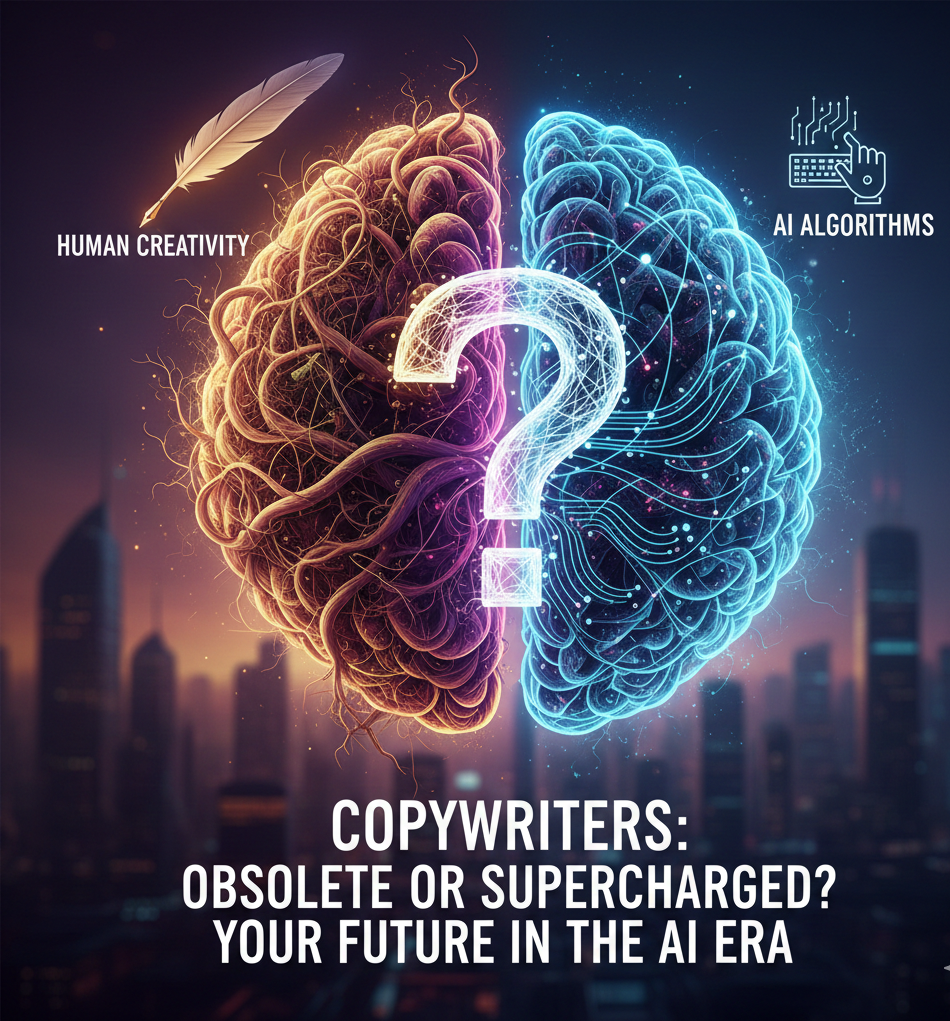
The “AI panic” in the writing world is shifting. We’ve moved past the “Will AI replace us?” phase and entered the “How do we evolve?” era. As we head into 2026, the role of a copywriter is being fundamentally rewritten. If you’re a wordsmith wondering where you fit in a world of instant LLM drafts, here is what’s next.
1. From “Writer” to “Strategy Architect”
The era of being a “word factory” is over. AI can churn out 500-word blog posts and product descriptions in seconds, but it doesn’t know why it’s writing them.
-
The Shift: Future copywriters will spend 20% of their time writing and 80% on strategy, empathy mapping, and brand positioning.
-
The Value: You aren’t just providing text; you’re providing the psychological blueprint that makes a customer choose Brand A over Brand B.
2. The Rise of the “AI Editor-in-Chief”
Junior copywriters used to handle the “grunt work” (first drafts, SEO meta tags, simple emails). Now, AI is the junior writer, and you are the Editor-in-Chief.
-
Human-in-the-Loop: 90% of content marketers plan to use AI by 2026, but only 12% trust it to publish without human review.
-
The Skill: Your value lies in fact-checking, injecting “human-first” anecdotes, and correcting the robotic “AI cadence” (you know the one—too many lists of three and “in today’s fast-paced digital world”).
3. Niche Expertise is the New SEO
AI is a generalist; it knows a little about everything. To survive, copywriters must become specialists. * Deep Domain Knowledge: A general AI can’t write a white paper on the nuances of Swiss trade tariffs or the technical specifics of a new SaaS architecture as well as a human expert.
-
Personal Branding: AI can’t have a “voice” based on lived experience. Copywriters who build a personal brand around their unique perspective will become “uncopyable.”
4. Mastering “GEO” (Generative Engine Optimization)
Traditional SEO (keywords and backlinks) is evolving into GEO. As users move away from Google search and toward AI assistants like Gemini or ChatGPT for answers, copywriters need to learn how to make their content “citable” for AI.
-
The Goal: Writing authoritative, high-quality content that AI models use as a primary source.
-
The Method: Focusing on credibility, timestamped original research, and unique insights that aren’t already in the AI’s training data.
The Verdict: The “Human Premium”
As the internet becomes flooded with “good enough” AI content, truly great, human-authored copy will command a premium. People are already experiencing “AI fatigue”—they crave stories, mistakes, humor, and raw emotion.
The copywriters who thrive won’t be the ones fighting the tools, but the ones using them to handle the boring stuff so they can focus on the art of connection.

